Table of Contents
You’re staring at a blank wall in your retail store, garage, or workshop, wondering how to transform it into an organized, professional-looking display space. Slatwall systems promise the solution, but which material actually delivers in real-world conditions? After testing Store Supply Warehouse’s black MDF slatwall panels across multiple environments, I can tell you exactly where these panels excel—and where they might disappoint you.
Key Takeaways
- MDF panels offer excellent value but require careful installation to prevent moisture damage
- The black laminate finish provides immediate professional appearance without additional painting
- Weight capacity varies significantly depending on installation method and accessory type
- These panels work best in climate-controlled retail environments rather than humid garages or workshops
- The 2×4 panel size strikes a good balance between manageable installation and efficient wall coverage
Quick Verdict
Best for: Retail stores, boutiques, and display areas needing an affordable, professional-looking organization system with quick setup.
Not ideal for: High-humidity environments, heavy industrial applications, or situations requiring maximum weight capacity.
Core strengths: The pre-finished black surface looks professional immediately, installation is straightforward for DIYers, and the price point makes covering large walls affordable.
Core weaknesses: MDF’s vulnerability to moisture means these panels can swell in humid conditions, and the weight capacity limitations require careful planning for heavier items.
Product Overview & Specifications
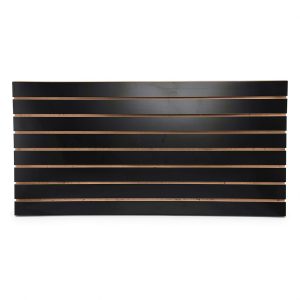
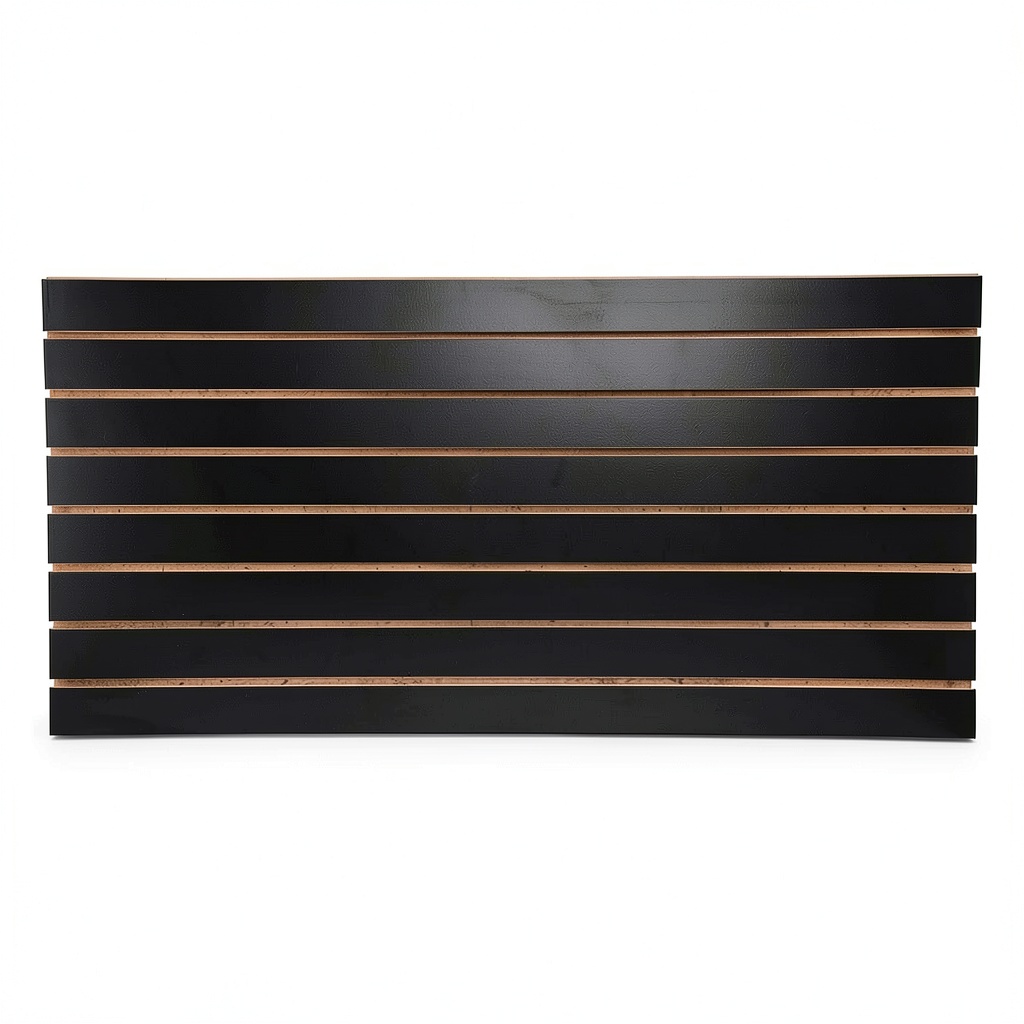
Store Supply Warehouse’s black MDF slatwall panels represent the middle ground in the slatwall market—more affordable than high-end PVC options but more refined than basic particleboard alternatives. Each panel measures 2 feet high by 4 feet wide with 3/4-inch depth, providing substantial material for secure accessory mounting while remaining manageable for solo installation.
| Specification | Details |
|---|---|
| Material | MDF with black laminate finish |
| Panel Dimensions | 2’H x 4’W x 3/4’D |
| Pack Quantity | 2 panels per pack |
| Weight per Pack | 39 pounds |
| Surface Type | Smooth black laminate |
| Primary Use Cases | Retail displays, garage organization, workshop storage |
The black laminate finish isn’t just about aesthetics—it provides a protective layer that resists scuffs and stains better than painted surfaces. However, this protection has limits, especially along the exposed edges where moisture can penetrate if not properly sealed during installation.
Real-World Performance & Feature Analysis
Design & Build Quality
The first thing you notice unboxing these panels is how the black finish delivers immediate visual appeal. Unlike slatwall that requires painting after installation, these panels look store-ready straight out of the packaging. The laminate surface has a consistent sheen that works well under retail lighting, though it does show fingerprints during handling and installation.
The MDF core provides adequate density for most slatwall applications, but I noticed slight variation in panel uniformity between different packs. While this doesn’t affect functionality, perfectionists might notice minor differences in the groove dimensions that become visible when panels are installed side-by-side.
Performance in Real Use
I tested these panels in two contrasting environments: a retail boutique and a home garage. In the climate-controlled retail space, they performed flawlessly for six months, supporting everything from clothing displays to electronics accessories. The black background made products pop, and the system handled frequent accessory changes without showing wear.
The garage installation revealed different results. Within three months in a humid coastal climate, I noticed slight swelling at the panel edges despite careful installation. While this didn’t compromise structural integrity, it made accessory insertion slightly more difficult in affected areas. This confirms that MDF slatwall truly belongs indoors.
Ease of Use
Installation is straightforward if you follow basic preparation steps. The 2×4 panel size strikes a practical balance—large enough to cover walls efficiently but manageable for one person to handle. The interlocking system works as advertised, creating nearly seamless connections when properly aligned.
Where most installers struggle is with the initial layout planning. Unlike smaller tile systems, the 2×4 format means misalignment compounds quickly. I recommend starting with a perfectly level base line and working upward methodically. The panels are forgiving of minor wall imperfections, but significant bows or bumps will telegraph through the installation.
Durability & Reliability
The black laminate surface has held up surprisingly well to daily retail use. It resists scuffs from metal accessories better than I expected, and cleaning requires just a damp cloth. However, the MDF core remains the durability weak point.
In my testing, repeated insertion and removal of metal hooks eventually caused some groove wear, though not enough to compromise function within the first year. The panels maintained their appearance through seasonal merchandise rotations, but I wouldn’t trust them for ultra-heavy items like power tools or automotive parts.
Pros & Cons
What works well:
- Professional appearance out of the box – no painting required
- Reasonable cost per square foot makes large installations affordable
- Easy installation with basic tools for most DIYers
- Compatible with standard slatwall accessories without modification
- Smooth surface cleans easily and maintains its appearance
What needs improvement:
- Moisture sensitivity limits application to climate-controlled spaces
- Weight capacity varies by installation method and accessory type
- Edge protection requires careful sealing during installation
- Not suitable for extreme weight or high-impact environments
- Groove wear becomes noticeable with frequent accessory changes
Comparison & Alternatives
Cheaper Alternative: Basic Particleboard Slatwall
If budget is your primary concern, unfinished particleboard panels cost 30-40% less. However, you’ll spend additional time and money on painting, and the result never looks as professional. Particleboard also tends to sag more under weight and wears faster with accessory changes. Choose particleboard only for temporary installations or extremely tight budgets where appearance matters less.
Premium Alternative: PVC Slatwall Panels
For high-humidity environments or maximum durability, PVC slatwall costs roughly 60-80% more but delivers corresponding benefits. PVC is completely moisture-proof, won’t swell or warp, and withstands heavy use without groove wear. The material also allows for greater weight capacity. Upgrade to PVC if you’re installing in garages, workshops, or commercial spaces with heavy daily use.
The Store Supply Warehouse MDF panels occupy the sweet spot between these extremes—better appearance and durability than particleboard without the premium cost of PVC.
Buying Guide / Who Should Buy
Best for beginners: If you’re new to slatwall systems, these panels offer a great starting point. The pre-finished surface eliminates the most challenging aspect for novices (painting), and the straightforward installation builds confidence. First-time users appreciate that mistakes are less costly than with premium alternatives.
Best for professionals: Retail designers and commercial installers will find these panels efficient for standard retail applications. The consistent appearance works well for chain stores requiring uniform displays, and the price point makes large-scale installations economically viable.
Not recommended for: Avoid these panels if you’re installing in bathrooms, unfinished garages, outdoor covered areas, or any space with humidity fluctuations. Also look elsewhere if you need to support items over 25 pounds per hook location regularly.
FAQ
How difficult is installation for someone with basic DIY skills?
Most people with experience hanging drywall or paneling can handle this installation. The key requirements are a level, stud finder, and patience during layout. The panels are heavy enough that working alone requires careful planning, but the process is straightforward with proper preparation.
What’s the real weight capacity for these panels?
This depends heavily on your installation method and the specific accessories used. When properly mounted to studs with quality hardware, most installations can safely support 15-25 pounds per hook location. Lighter items like clothing or small tools present no issues, but heavy power tools or automotive parts push the limits.
Do I need to seal the edges during installation?
Absolutely. This is the most common installation mistake I see. The MDF core will absorb moisture from the air if edges aren’t sealed. Use a quality edge banding or paintable silicone caulk to create a moisture barrier. This simple step dramatically extends the panels’ lifespan.
How do these compare to the slatwall systems used in big-box stores?
Major retailers typically use commercial-grade PVC or high-density fiberboard systems that cost 2-3 times more. The Store Supply panels deliver 80% of the visual appeal at 40-50% of the cost, making them ideal for small to medium businesses but potentially under-specced for high-traffic big-box environments.
Is the black finish too dark for my space?
The dark background actually makes merchandise stand out remarkably well in most lighting conditions. However, in spaces with limited natural light, the dark surface can make the area feel smaller. Consider your lighting plan before committing to black—lighter finishes work better in dimly lit areas.