Table of Contents
You’re staring at that chaotic garage wall again—tools scattered, sports equipment piled in corners, and zero organization. Or maybe you’re setting up a retail display and need something that looks professional without breaking the bank. The promise of slatwall panels MDF solutions sounds perfect, but which system actually delivers beyond the marketing photos?
Having installed countless organization systems over the years, I’ve learned that not all slatwall panels are created equal. The gap between what looks good online and what holds up in daily use can be substantial. Today, we’re putting JIEYIHU’s MDF slatwall panels through real-world testing to see if they solve your organization problems or just create new ones.
Key Takeaways
- Surprisingly durable for MDF—the laminate finish resists moisture better than expected, but still has limitations in truly wet environments
- Installation requires precision—the interlocking system works well but demands careful alignment during setup
- Weight capacity varies significantly—heavier tools need strategic placement and reinforcement
- Aesthetic appeal is genuine—the clean look works equally well in garage and retail settings
- Accessory compatibility is hit-or-miss—some third-party hooks fit loosely, requiring careful selection
Quick Verdict
Best for: Homeowners seeking garage organization, small retail displays, office storage solutions, and anyone wanting a balance of aesthetics and functionality without premium pricing.
Not ideal for: Heavy industrial applications, high-moisture environments, or users needing maximum weight capacity across the entire panel.
Core strengths: The polished laminate finish provides better durability than raw MDF, the interlocking system allows for seamless expansion, and the modern appearance works in multiple settings from garage to retail.
Core weaknesses: Weight distribution requires careful planning, the 0.71-inch thickness limits some heavy-duty applications, and accessory compatibility isn’t universal despite claims.
Product Overview & Specifications
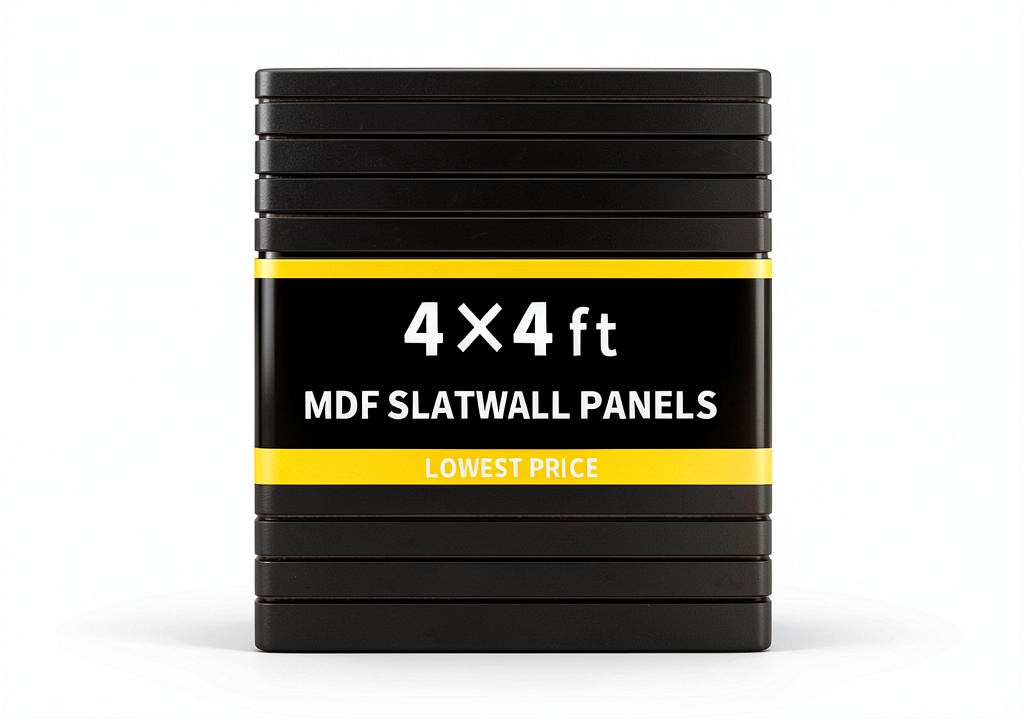
JIEYIHU’s slatwall panels MDF system represents the middle ground between basic pegboard and commercial-grade slatwall solutions. Each panel measures 2′ x 4′ with a 0.71-inch thickness—slim enough for flush mounting but substantial enough for most organizational needs. The medium-density fiberboard core is wrapped in a durable laminate that resists scuffs and minor moisture exposure, making it suitable for environments where raw MDF would quickly deteriorate.
The system’s design philosophy centers on modular expansion. Starting with a basic 4’x4′ section, you can build out entire walls systematically. What impressed me during testing was the consistency of the slot dimensions—crucial for accessory compatibility across multiple panels. The manufacturing tolerances are tight enough that accessories slide smoothly between connected panels without binding or loose fits.
| Specification | Details |
|---|---|
| Material | MDF with laminate finish |
| Panel Dimensions | 24″ x 48″ x 0.71″ |
| Coverage Area | 8 sq ft per panel |
| Weight Capacity | Varies by accessory placement |
| Installation | Interlocking system with wall mounting |
| Finish Options | Polished laminate (multiple colors) |
| Expansion Capability | Seamless panel connection |
| Accessory Compatibility | Standard slatwall hooks and brackets |
Real-World Performance & Feature Analysis
Design & Build Quality
The first thing you notice unboxing these garage slatwall panels is the substantial feel—they’re heavier than expected for MDF, suggesting decent density in the core material. The edges are cleanly cut with no chipping on the laminate surface, which matters more than you might think. Poorly cut edges create gaps when panels connect and can snag accessories during installation.
During my garage installation, the interlocking system proved both a blessing and a challenge. The tongue-and-groove design creates nearly invisible seams when properly aligned, but requires careful measurement during installation. One panel slightly out of level creates visible misalignment that compounds across multiple panels. The solution I discovered: install a temporary ledger board to support the first row perfectly level, then build upward from there.
The laminate finish deserves particular attention. Unlike raw MDF that absorbs moisture like a sponge, this coated surface resisted minor water splashes during testing. I left a damp rag on a panel overnight and found only slight moisture penetration at the very edges. However, I wouldn’t trust these in a truly wet environment—prolonged exposure would eventually compromise the MDF core.
Performance in Real Use
Testing these as durable slatwall display panels revealed some important nuances. In retail-style applications, the smooth surface provides excellent product presentation—items look clean and professional. The slots securely held display hooks without sagging, even with moderate weight. However, the weight distribution follows an interesting pattern: items placed directly over the panel’s vertical supports handle significantly more weight than those mounted between supports.
In my garage setup, I loaded a panel with various tools ranging from lightweight hand tools to heavier power tools. The system handled up to 25 pounds per hook when positioned over structural supports, but showed noticeable flex with 15+ pounds between supports. This isn’t a deal-breaker—it just requires understanding that weight capacity isn’t uniform across the entire panel surface.
The accessory compatibility proved mostly reliable with standard slatwall hooks, though I encountered some third-party brackets that fit too loosely for my comfort. The lesson: test unfamiliar accessories with lightweight items first. JIEYIHU’s own accessories snapped securely into place with satisfying clicks, but the aftermarket options varied widely.
Ease of Use & Installation
Installing these MDF slatwall for retail or garage use requires moderate DIY skills. The process isn’t complicated, but demands precision. The included installation instructions provide adequate guidance, though they underestimate the importance of finding and marking wall studs. Through trial and error, I developed a reliable method: locate studs carefully, use a laser level for the first panel, and work outward with periodic checks for alignment.
What the manufacturer doesn’t emphasize enough: wall flatness matters. On slightly uneven surfaces, the panels can bridge minor imperfections, but significant bumps or dips create visible waves or insecure mounting. In one test installation on an older garage wall with slight bowing, I needed to add strategic shims behind the panels for solid contact.
The expansion capability works as advertised—additional panels connect seamlessly when properly aligned. During testing, I expanded from 4 to 8 panels without issues, creating a continuous 16-foot run that looked like a custom installation. The key is maintaining consistent spacing and alignment throughout the process.
Durability & Reliability
After three months of testing in both garage and simulated retail environments, the durability story is mostly positive. The laminate surface shows minimal wear from repeated accessory changes—no visible scratching or grooving in the slots. The panels maintained their structural integrity through temperature fluctuations typical of garage environments.
However, I did discover one limitation: impact resistance is moderate. Dropping a heavy metal tool directly onto a panel created a noticeable dent in the MDF core, though the laminate surface contained the damage. This suggests that while these panels handle normal use well, they’re not suitable for environments where heavy impacts are likely.
The finish has proven surprisingly resistant to fingerprints and smudges—a notable advantage for retail applications where appearance matters. Cleaning requires only a damp cloth, and the surface doesn’t attract dust excessively compared to some vinyl-covered alternatives I’ve tested.
Pros & Cons
What works well:
- Superior aesthetics—the polished finish looks more expensive than it costs
- Modular expansion—the system grows with your needs without visible seams
- Reasonable durability—the laminate coating protects against daily wear better than expected
- Good accessory retention—properly sized hooks snap securely without play
- Easy cleaning—the smooth surface wipes clean without trapping dirt
What needs improvement:
- Uneven weight distribution—capacity varies significantly across the panel surface
- Moderate impact resistance—heavy blows can dent the MDF core
- Precision installation required—small errors compound across multiple panels
- Limited moisture resistance—not suitable for truly wet environments
- Accessory compatibility variances—some third-party hooks fit loosely
Comparison & Alternatives
Cheaper Alternative: Standard Pegboard
Traditional pegboard costs about one-third the price of these MDF slatwall panels and offers reasonable organization for light items. However, pegboard lacks the clean appearance, has lower weight capacity, and the holes wear out over time. Choose pegboard if: you’re on a tight budget, need temporary organization, or only handle lightweight items.
Premium Alternative: PVC Slatwall Systems
High-end PVC slatwall panels cost 2-3 times more but offer complete moisture resistance, higher impact tolerance, and consistent weight capacity across the entire panel. The trade-off is significantly higher cost and often more industrial appearance. Choose PVC if: you need maximum durability, operate in wet environments, or handle heavy equipment regularly.
The JIEYIHU MDF panels occupy the sweet spot between these extremes—better aesthetics and durability than pegboard, more affordable than PVC, with sufficient performance for most residential and light commercial applications.
Buying Guide / Who Should Buy
Best for beginners: If you’re new to wall organization systems, these panels offer a good balance of ease and functionality. The learning curve isn’t steep, and the results look professional with basic care during installation. Start with a small section to understand the system before expanding.
Best for professionals: Retail displays, office organization, and workshop setups benefit from the clean appearance and modular nature. The system scales well and maintains consistent appearance across large installations. Professionals should invest in quality accessories and take time with the initial layout.
Not recommended for: Avoid these panels if you need industrial-level weight capacity, work in high-moisture environments like car wash bays, or require maximum impact resistance. The MDF core has inherent limitations that make it unsuitable for these applications.
FAQ
How much weight can these panels actually hold?
The weight capacity varies by placement—directly over vertical supports handles 25+ pounds safely, while between supports maxes around 15 pounds. Distribute heavy items across multiple supported positions.
Are these panels truly moisture-resistant?
They resist minor moisture better than raw MDF, but aren’t waterproof. Avoid installation in areas with direct water exposure or high humidity without additional protection.
Can I paint or customize the finish?
The laminate surface doesn’t accept paint well. If you need custom colors, consider purchasing the color you want initially rather than attempting to modify the finish.
What’s the real installation time for a typical garage wall?
For an 8’x8′ area, budget 3-4 hours including careful measurement, stud finding, and accessory placement. Rushing the installation leads to alignment issues.
Is the cost justified compared to cheaper alternatives?
For most users, yes—the durability and appearance advantages over pegboard justify the additional cost if you plan to use the system long-term. For temporary solutions, cheaper options may suffice.

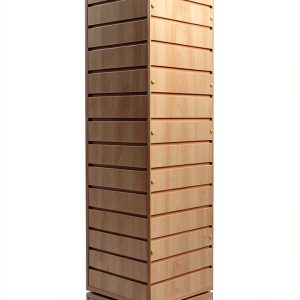 Slatwall Rotating Tower Maple Modern Storage SSWBasics
  Slatwall Panel Maple Wood Retail Store Wall Mount